
When a farmer in remote Rajasthan asked for a helicopter to reach his farm, no one expected the District Collector to take him seriously — but Tina Dabi did. On January 28, 2025, during a routine public hearing in Sedwa, Barmer district, Mangilal, a 58-year-old farmer from Jorapura village, stood up and made an extraordinary plea: "There’s no road to my house. No way to reach my crops. I need a helicopter." The room fell silent. Some laughed. Others shook their heads. But Dabi, the 2015 UPSC topper now serving as Barmer’s District Collector since late 2024, didn’t dismiss him. She asked for details. Then she ordered an immediate investigation. Here’s the thing: Mangilal wasn’t being dramatic. He was desperate. His land, like many in western Rajasthan, sits on the edge of a crumbling dirt track that once connected his home to the main road. Over the past year, a government schoolteacher — unnamed in initial reports but later identified by district officials — had illegally expanded a boundary wall, fencing off a narrow but vital access path. The encroachment wasn’t just an inconvenience. It was a blockade. With no alternative route, Mangilal couldn’t transport his wheat and mustard harvest to market. His tractor sat idle. His crops rotted. "I tried walking," Mangilal told reporters later. "But the land is uneven. I slipped. Broke my ankle last monsoon. Still no one fixed it." Dabi’s response was swift. Within 24 hours, survey teams from the Barmer Public Works Department verified the encroachment. By noon on January 29, a demolition crew was on site. The wall came down. The path reopened. No helicopter was needed — but the message was loud. This wasn’t just about one farmer’s land. It was about a system that lets small injustices fester until people beg for helicopters. Rajasthan’s rural roads have been a chronic problem. According to the state’s 2024 Rural Development Department data, nearly 1 in 5 villages — 18.7% — still lack all-weather connectivity. Most are in the arid west, where dust storms bury tracks and seasonal rains turn paths into quagmires. But until now, no one had ever asked for a chopper. Not because they didn’t need one, but because they’d stopped believing anyone would listen. Mangilal’s request went viral. India Today, The Print, News18, and The Hans India all ran stories by 7 PM on January 29. Social media exploded. Memes flew. But beneath the jokes was a deeper frustration: Why does a citizen have to make a spectacle to get basic infrastructure? Dabi, 33, has been no stranger to headlines. She became a national icon in 2015 as the first woman to top the UPSC exam in over a decade. Her 2018 marriage to fellow IAS officer Athar Aamir Khan drew media frenzy. A 2024 video of her bowing five times to BJP leader Satish Poonia sparked national debate on protocol and power. But this moment — quietly listening to a farmer in a dusty hall — may define her tenure more than any viral moment. "We don’t need helicopters," Dabi told reporters after the encroachment was removed. "We need accountability. We need officers who don’t look away when a villager says, ‘I can’t reach my land.’" The schoolteacher involved has been suspended pending disciplinary action. The Barmer district administration, overseeing 2.6 million people across 15 tehsils, has now launched a statewide audit of encroachments on rural access routes. Dabi’s office has also pledged to install GPS-tagged access markers on all 1,200 rural roads in Barmer by June. The twist? Mangilal didn’t ask for compensation. He didn’t ask for money. He asked for a way to work. And for once, someone answered.
Why This Matters Beyond Barmer
Rural India is full of stories like Mangilal’s — quiet, ignored, and ultimately unbearable. In Uttar Pradesh, farmers have walked 12 kilometers to sell their produce because a local MLA built a gate across the road. In Odisha, entire villages were cut off for months after a road was diverted for a temple expansion. But in most cases, the complaints vanish into bureaucratic noise. What made this different? A collector who didn’t treat the request as absurd. A system that moved fast. And a public that finally paid attention. The Barmer district administration didn’t just fix a road. They restored trust.What Happened After the Helicopter Request?
The timeline was remarkable: - January 28, 10:00 AM IST: Mangilal makes request during public hearing in Sedwa. - January 28, 5:30 PM IST: Dabi orders survey of Jorapura access route. - January 29, 8:00 AM IST: PWD teams confirm encroachment by government schoolteacher. - January 29, 1:00 PM IST: Demolition team removes illegal wall. - January 29, 4:00 PM IST: Schoolteacher suspended. - January 30, 10:00 AM IST: Dabi announces audit of all rural access roads in Barmer. No one was arrested. No lawsuits filed. Just a wall taken down — and a system reminded that its job isn’t to manage paperwork, but to keep people connected.Who Is Tina Dabi?
Born in 1992 in Delhi, Dabi graduated from St. Stephen’s College before cracking the UPSC exam in 2015 with the highest score in decades. She joined the IAS in 2016 and served in Rajasthan’s Jaipur and Jodhpur districts before her 2024 transfer to Barmer. Known for her no-nonsense approach, she’s personally visited 87 villages in her first six months. Her office has processed over 1,400 grievances since October 2024 — 92% resolved within 15 days. She’s also one of the few senior IAS officers who still answers her own phone.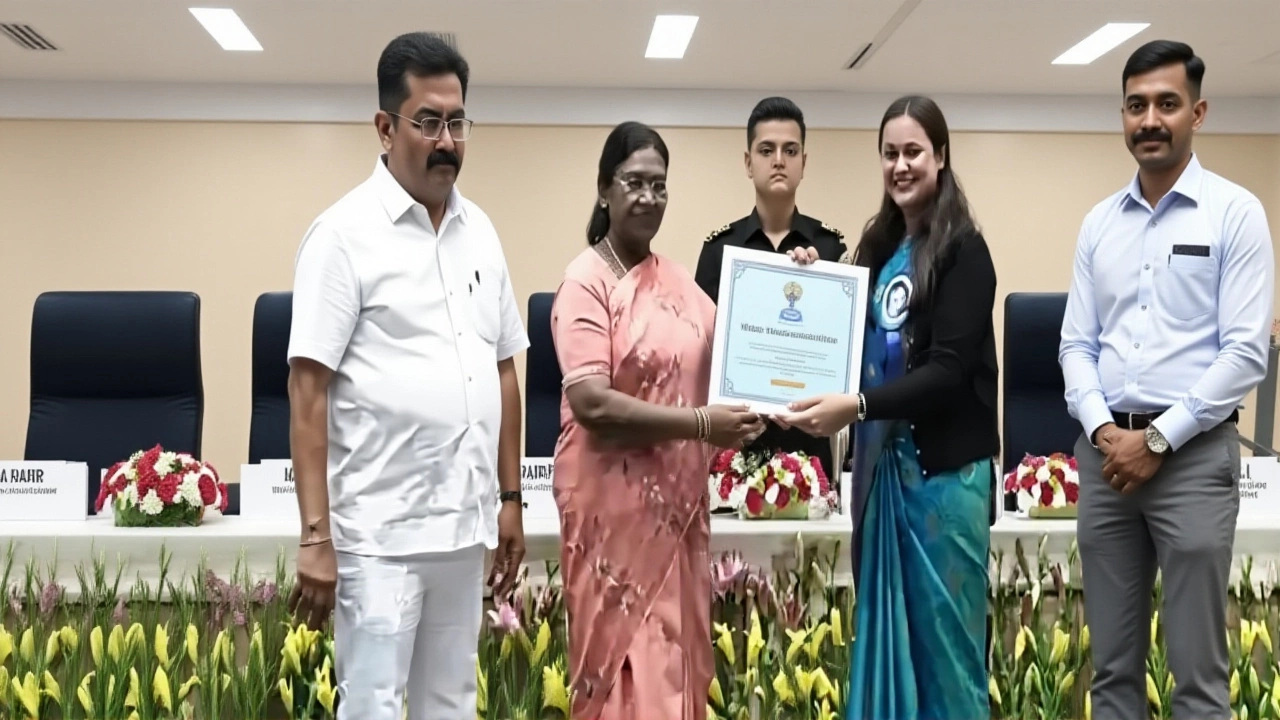
What’s Next?
Dabi’s team is now drafting a new policy: "No Encroachment, No Delay." Under the proposal, any government employee found blocking public access will face immediate suspension and mandatory community service. The state government is considering rolling it out statewide. Meanwhile, Mangilal harvested his first crop last week. He didn’t need a helicopter. He just needed someone to hear him.Frequently Asked Questions
Why did Mangilal ask for a helicopter instead of just complaining about the road?
Mangilal’s request wasn’t literal — it was a cry of desperation. After years of ignored complaints, he knew traditional channels had failed. The helicopter was symbolic: if the government wouldn’t fix the road, maybe they’d at least fly him to his land. It was a protest dressed as a plea, and it worked because it was so absurd it couldn’t be ignored.
How common are road encroachments in rural Rajasthan?
According to 2024 government data, over 4,800 rural habitations in Rajasthan lack all-weather roads. Encroachments by local officials, landowners, or even religious institutions are frequent but rarely acted upon. In Barmer alone, 17 similar cases were recorded in 2024 — all remained unresolved until Mangilal’s case triggered a statewide audit.
What role did Tina Dabi’s background play in her response?
Dabi’s UPSC topper status gave her visibility, but her real strength was her experience in grassroots administration. Having worked in Jaipur and Jodhpur, she understood how bureaucratic inertia hurts rural communities. She didn’t act because she was famous — she acted because she’d seen too many farmers lose crops to neglect.
Is this the first time a government official has been suspended for road encroachment in Rajasthan?
No — but it’s rare. In 2020, a forest officer in Udaipur was suspended for building a boundary wall across a public trail. However, that case took nine months to resolve. Dabi’s team acted in under 24 hours, signaling a new standard for accountability. The speed of response is what made this case historic.